
Limiting withdrawals from your retirement plans means you’ll need to rely on other income sources to cover living expenses and unexpected costs. However, this approach also provides you with the flexibility to adjust your strategy as needed, allowing you to navigate financial challenges while maintaining your long-term financial health.
Keeping it up
The rate of return on your retirement assets during your contribution years is crucial in shaping the long-term value of your account. It’s clear that an average annual return of 6% can significantly elevate your account value compared to a 4% return. This emphasis on strong returns continues even as you enter retirement, making it vital to achieve solid growth on the funds you have remaining.
This is why many retirement advisers now advocate for maintaining a higher allocation of equities—such as stocks, ETFs, and stock mutual funds—later into retirement than was previously recommended. Traditionally, advisers would suggest that your portfolio’s fixed-income investments should match your age. For instance, if you were 65, the idea was to allocate 65% of your portfolio to bonds and similar investments.
However, the current trend encourages investors aged 65 to consider having 50% or more of their portfolios in equities. This shift aims to provide the potential for higher withdrawals while still ensuring your money lasts throughout retirement. The downside, of course, is the inherent risk of equity markets fluctuating, which can diminish your account’s value and affect how much you can withdraw without dipping into your principal.
Looking to grow your wealth?
Let me help you make your money work for you
Managed Investment Accounts – harness the expertise of professional asset management. I’ll focus on growing your wealth, so you can focus on living your best life.
Automated Trading System – effortlessly grow your capital with our automated trading solutions
A hypothetical plan
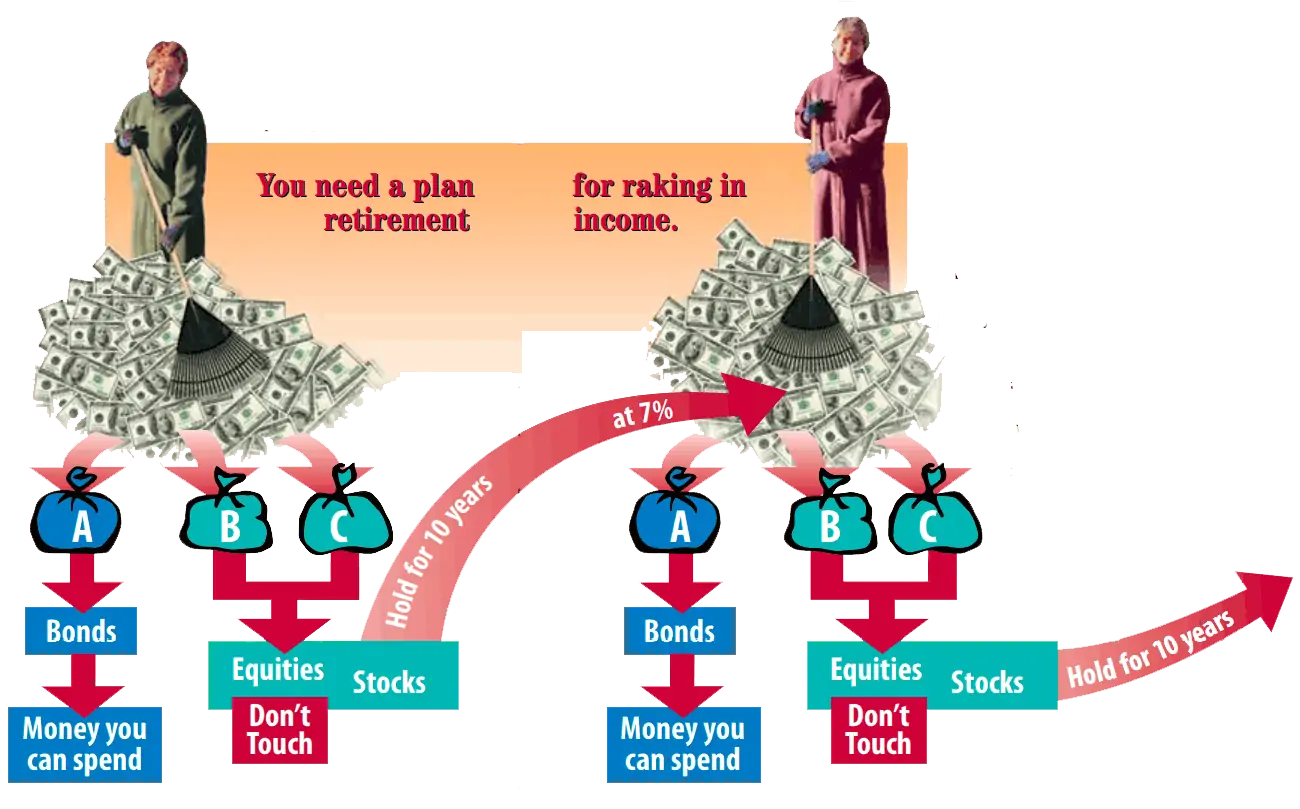
Once the first ten-year period concludes, you can repeat this strategy, cycling through the phases again.
Here’s a hypothetical example to illustrate this approach: Imagine your account starts with a value of $300,000. You would invest $100,000 in $10,000 bonds, with one bond maturing each year for the next ten years. The remaining $200,000 would be allocated to equities, aiming for an annualized return of 7% or better over that decade.
As the ten-year period comes to a close, you can implement the same strategy once more, reallocating a third of your assets for spending while investing the remainder for continued growth.
However, it’s crucial to remember that there are no guarantees in investing. Collaborating with a financial adviser is a wise decision before making any investments. Additionally, you’ll need to carefully consider the risks of potential losses against the pursuit of higher returns.
Anticipating the inevitable
While your required minimum distribution (RMD) is calculated based on your life expectancy rather than presented as a specific percentage, the actual amount you withdraw represents a percentage of your account’s value. For instance, if you have a distribution period of 22.9 years—applicable at age 75—you’ll need to withdraw approximately 4.37% of your account value.
As you age and your life expectancy shortens, the percentage you are required to withdraw increases each year. If your account balance isn’t growing at least as fast as your withdrawals, you risk depleting your funds. This scenario is manageable if you don’t rely on that income. However, to mitigate the impact of these larger withdrawals, you may want to consider investing a portion of your portfolio in a manner that seeks higher returns while aligning with your risk tolerance.
Wishing you a great week!
Want Your Money To Grow?
Subscribe to get free research, trading lessons, and more insights.
(We do not share your data with anybody, and only use it for its intended purpose)


