
Asset allocation is a strategy designed to enhance investment returns while managing risk. By diversifying your investments across various asset classes, you can potentially improve overall performance and reduce volatility.
Essentially, asset allocation involves dividing your portfolio into different categories of investments, each with its own risk and return characteristics, to create a balanced approach that aligns with your financial goals and risk tolerance.
By investing in multiple asset classes simultaneously, you can capitalize on the strong performance of each class during favorable periods while minimizing vulnerability during weaker periods. This strategy helps you avoid the pitfalls of focusing solely on current strong performers or hastily selling off underperformers, thereby maintaining a balanced and resilient portfolio.
Following asset allocation formula
To simplify allocation decisions, financial professionals have developed standard formulas for dividing your portfolio based on factors such as your age, investment goals, liquidity needs, and risk tolerance. These models provide a starting point but can be customized to fit your individual circumstances and preferences.
Looking to grow your wealth?
Let me help you make your money work for you
Managed Investment Accounts – harness the expertise of professional asset management. I’ll focus on growing your wealth, so you can focus on living your best life.
Automated Trading System – effortlessly grow your capital with our automated trading solutions
For instance, you might choose a traditional allocation model such as 60% in stocks, 30% in bonds, and 10% in cash, and maintain this distribution over time. Alternatively, you could adopt a more aggressive approach, allocating 80% to stocks early in your financial journey and then gradually shifting to a more conservative allocation, such as 40% in stocks, after retirement.
Overview
Thinking in percentages when adding money to your accounts might seem complex, but it’s quite manageable. For instance, with a moderate allocation model of 60% in stocks, 30% in bonds, and 10% in cash, if you invest $1,000, you would allocate $600 to a stock mutual fund, $300 to a bond fund, and $100 to a money market fund, which could go toward a CD or T-bill.
While achieving perfect allocation might be challenging, the goal isn’t precision but rather maintaining a balanced portfolio. By consistently distributing your investments across all categories, you simplify the process of sticking to your desired allocation.

Picking up an asset
Determining how to allocate your investment assets among stocks, stock ETFs and mutual funds, bonds, bond ETFs and mutual funds, and cash equivalents can be challenging. There isn’t a one-size-fits-all solution, as the ideal allocation for a 25-year-old may not be suitable for someone who is 50 or 75. The level of market unpredictability, particularly with stocks and stock funds, poses less of a threat when you have a long investment horizon. However, if you need your investments to achieve a near-term goal, you may want to take steps to minimize the risk of losing your principal.
When deciding on your asset allocation, consider your age, investment goals, estimated costs, portfolio size, and risk tolerance. Your investment experience also plays a crucial role.
While many investors focus on traditional asset classes like stocks, bonds, and cash, some choose to diversify further by incorporating smaller allocations in real estate, equity options, commodities, and direct investments. This strategy can provide exposure to non-correlated assets, which are less influenced by the same factors that drive fluctuations in stock and bond prices.
A cyclical pattern
Investment markets and the broader economy often follow cyclical patterns that influence the performance of various asset classes. For instance, when market interest rates rise, the prices of existing bonds usually decline, whereas they tend to increase when rates fall. Conversely, stocks generally appreciate when interest rates drop but may experience declines when rates rise.
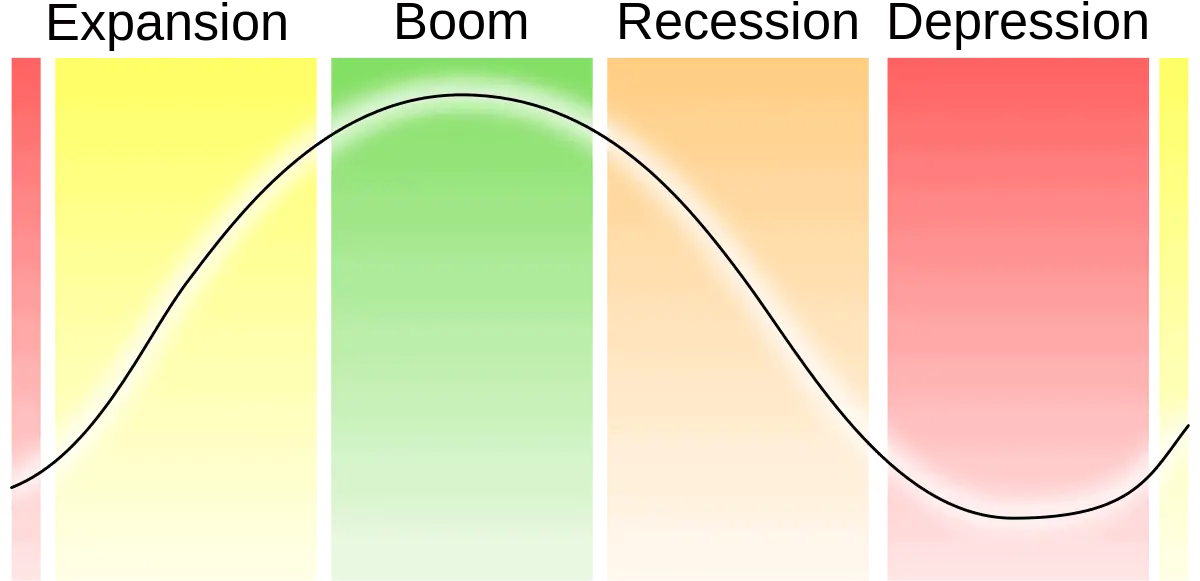
Although you can’t precisely predict changes in interest rates or the timing and impact of other factors like corporate earnings, unemployment rates, or political instability, asset allocation can help mitigate their effects on your portfolio. By diversifying your investments, you can soften the impact on your portfolio’s value, unlike holding only stocks during a market downturn, which offers no cushion. However, it’s important to remember that asset allocation cannot guarantee profits or protect you from losses in a major market decline.
Age matters
Allocating investments within your retirement accounts is just as crucial as managing your personal investments. For instance, you might allocate a significant portion of your 401(k) or IRA to stocks while placing some in fixed-income investments and minimizing cash holdings. It’s also essential to view your retirement and non-retirement investments collectively. For example, if your 401(k) is heavily invested in stock mutual funds, you might balance this by increasing your allocation to fixed-income investments in your non-retirement accounts.
Conversely, if you anticipate a fixed-income pension upon retirement, you might consider increasing your stock investments in your personal accounts. Coordinating these strategies and optimizing your overall allocation can be complex, and this is where working with a financial adviser can be particularly beneficial in enhancing your financial outcomes.
In conclusion
Wishing you a great week!
Want Your Money To Grow?
Subscribe to get free research, trading lessons, and more insights.
(We do not share your data with anybody, and only use it for its intended purpose)


