
A donor-advised fund (DAF) is an effective way to organize philanthropic giving, allowing donors to contribute to charitable causes while benefiting from tax advantages. Setting up a DAF is simple—all you need is a sponsor organization, a fund name, and an initial contribution.
What Is a Donor-Advised Fund?
A DAF is a giving account established within a public, nonprofit sponsor organization such as a community foundation, religious foundation, university, or financial services company. These funds are maintained and operated exclusively by a Section 501(c)(3) nonprofit organization.
Why Choose a Donor-Advised Fund?
DAFs offer several advantages, including:
- Tax Benefits: Contributions provide immediate tax deductions, and any investment growth is tax-free.
- Ease of Use: No extensive paperwork, startup costs, or maintenance fees.
- Flexible Giving Options: Donors can make gifts anonymously or in someone else’s name.
- Legacy of Giving: Enables donors to create a long-term charitable impact beyond individual gifts.
Opening a Donor-Advised Fund
Setting up a DAF involves three simple steps:
- Make a Tax-Free Gift: Donate cash, stocks, real estate, or other assets. Non-cash gifts may provide greater tax savings.
- Choose an Investment Option: Assets in the fund can be allocated to pre-approved investment options, allowing for tax-free growth.
-
Recommend Grants: Once funded, donors can recommend grants to charitable organizations at any time.
Naming Your DAF
When establishing a DAF, donors:
- Name the Fund: Many include their name and a cause they support (e.g., The Jane Smith Education Fund). Anonymity is also an option.
- Appoint Advisors and Successors: Advisors recommend grants, while successors manage the fund after the donor’s passing.
Initial Contributions & Minimum Requirements
Each sponsor organization sets its own minimum contribution, which can range from $10,000 to $100,000 or more. Contributions can include a combination of assets such as cash, stocks, and real estate. Subsequent donations must also meet the sponsor’s minimum threshold.
Youth Discount for Aspiring Philanthropists
Some sponsoring charities allow young donors to open a DAF with a reduced minimum—sometimes as low as $2,000—encouraging early philanthropy.
Looking to grow your wealth?
Let me help you make your money work for you
Managed Investment Accounts – harness the expertise of professional asset management. I’ll focus on growing your wealth, so you can focus on living your best life.
Automated Trading System – effortlessly grow your capital with our automated trading solutions
Making Grants from a DAF
Donors can recommend as many grants as they wish, typically starting from $100 to $250 per grant. However, grants may take up to two weeks to process. End-of-year donations should be planned well in advance to meet deadlines.
Due Diligence & Grant Approval
Before approving a grant, the sponsor organization verifies:
- The recipient’s nonprofit status.
- The grant’s compliance with tax laws (e.g., funds cannot be used for personal benefits like tuition or membership fees).
- If a grant is not approved, the sponsor organization may suggest alternative nonprofits.
Tracking Your DAF Contributions
One of the greatest benefits of a DAF is simplified recordkeeping. Sponsor organizations provide quarterly and annual statements consolidating:
- A summary of grants made from the fund.
- Investment performance and gains.
- Tax receipts for contributions.
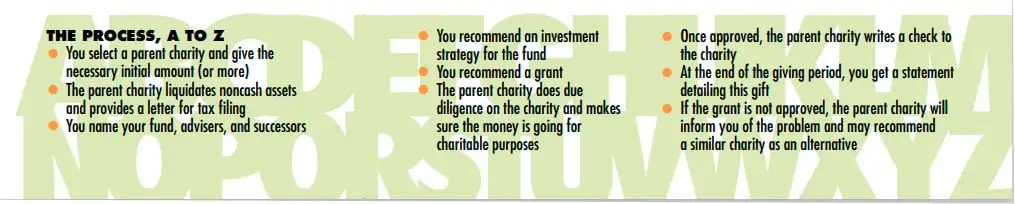
The Donor-Advised Fund Process: Step by Step
| Step 1 | Step 2 | Step 3 |
|---|---|---|
| You select a parent charity and give the necessary initial amount or more) | You recommend an investment strategy for the fund | Once approved, the parent charity writes a check to the charity |
| The parent charity liquidates noncash assets and provides a letter for tax filing | You recommend a grant | At the end of the giving period, you get a statement detailing this gift |
| You name your fund, advisers, and successors | The parent charity does due diligence on the charity and makes sure the money is going for charitable purposes | If the grant is not approved, the parent will inform you of the problem and may recommend a similar charity as an alternative |
Final Thoughts
A donor-advised fund is an excellent way to support charitable causes, maximize tax benefits, and build a legacy of philanthropy. With minimal administrative burden and the ability to invest and grow contributions, a DAF provides flexibility and long-term giving opportunities for donors of all backgrounds.
Wishing you a great week!
Want Your Money To Grow?
Subscribe to get free research, trading lessons, and more insights.
(We do not share your data with anybody, and only use it for its intended purpose)


