
Introduction
The market is constantly evolving. Based on my experience, the Wyckoff Method proves particularly effective for metals and other commodities in today’s market conditions, even though Wyckoff originally concentrated on stocks. His approach is centered on understanding market dynamics through detailed supply and demand analysis.
This is achieved by studying price action, volume, and time. Below, you’ll find a schematic of his concept to help clarify these ideas.
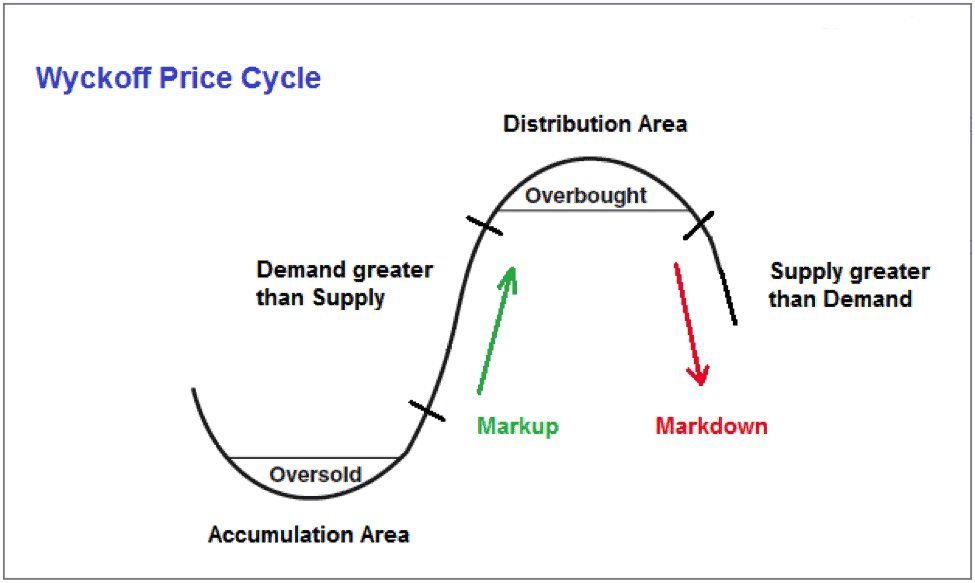
Wyckoff Method – Laws
Law of supply and demand
Looking to grow your wealth?
Let me help you make your money work for you
Managed Investment Accounts – harness the expertise of professional asset management. I’ll focus on growing your wealth, so you can focus on living your best life.
Automated Trading System – effortlessly grow your capital with our automated trading solutions
Law of cause and effect
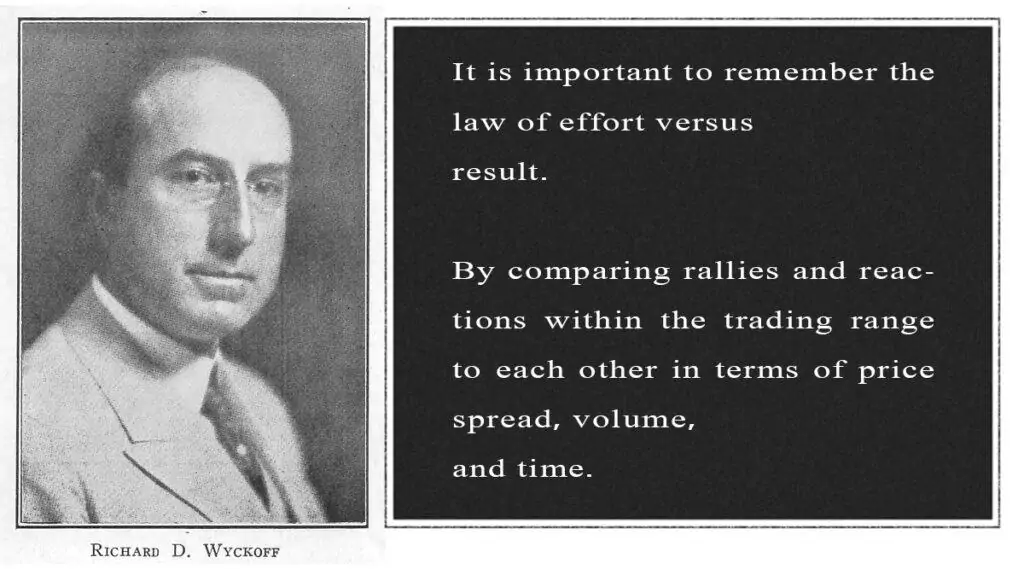
The law of effort vs result
Best books to learn Wyckoff Method
The Wyckoff Methodology in Depth: How to trade financial markets logically (Trading and Investing Course: Advanced Technical Analysis Book 1). It is a great book to learn the Wyckoff approach – how and why markets move, three fundamental laws, the process of accumulation and distribution, events and phases of the Wyckoff Methodology, etc.
Trades About to Happen: A Modern Adaptation of the Wyckoff Method. Honestly, the book on adapting the classic work of Richard Wyckoff to today’s markets. You will learn how to construct intraday wave charts similar to Wyckoff’s originals, draw support/resistance lines, interpret the struggle for dominance in trading ranges, recognize action signals at turning points, and more.
My Secrets of Day Trading in Stocks. Fantastic guide for day traders from the market legend with many examples and detailed explanations.
Price Action Breakdown: Exclusive Price Action Trading Approach to Financial Markets. This book covers concepts, ideas, and price action trading methods that you most likely haven’t seen elsewhere. The knowledge contained can be used to trade any financial market such as Forex, Futures, Stocks, Commodities, and all major markets.
Charting the Stock Market: The Wyckoff Method. This book guides you step by step through the Wyckoff method: first, the basic principles; second, examples of the technique applied to the bond market; and third, an outline of steps to put the method to use. Details of the Wyckoff method covered in this book include point and figure charting, trends, price and volume studies on vertical charts, stop orders, forecasting, wave charts & intraday, group stock behavior, stock selection criteria, and much more …
How To Make Money With Wyckoff Method [Full Guide] by Inna Rosputnia
Wishing you a great week!
Want To Make Your Trading More Profitable?
Subscribe to get free research, trading lessons, and more insights.
(We do not share your data with anybody, and only use it for its intended purpose)


